Bangabandhu
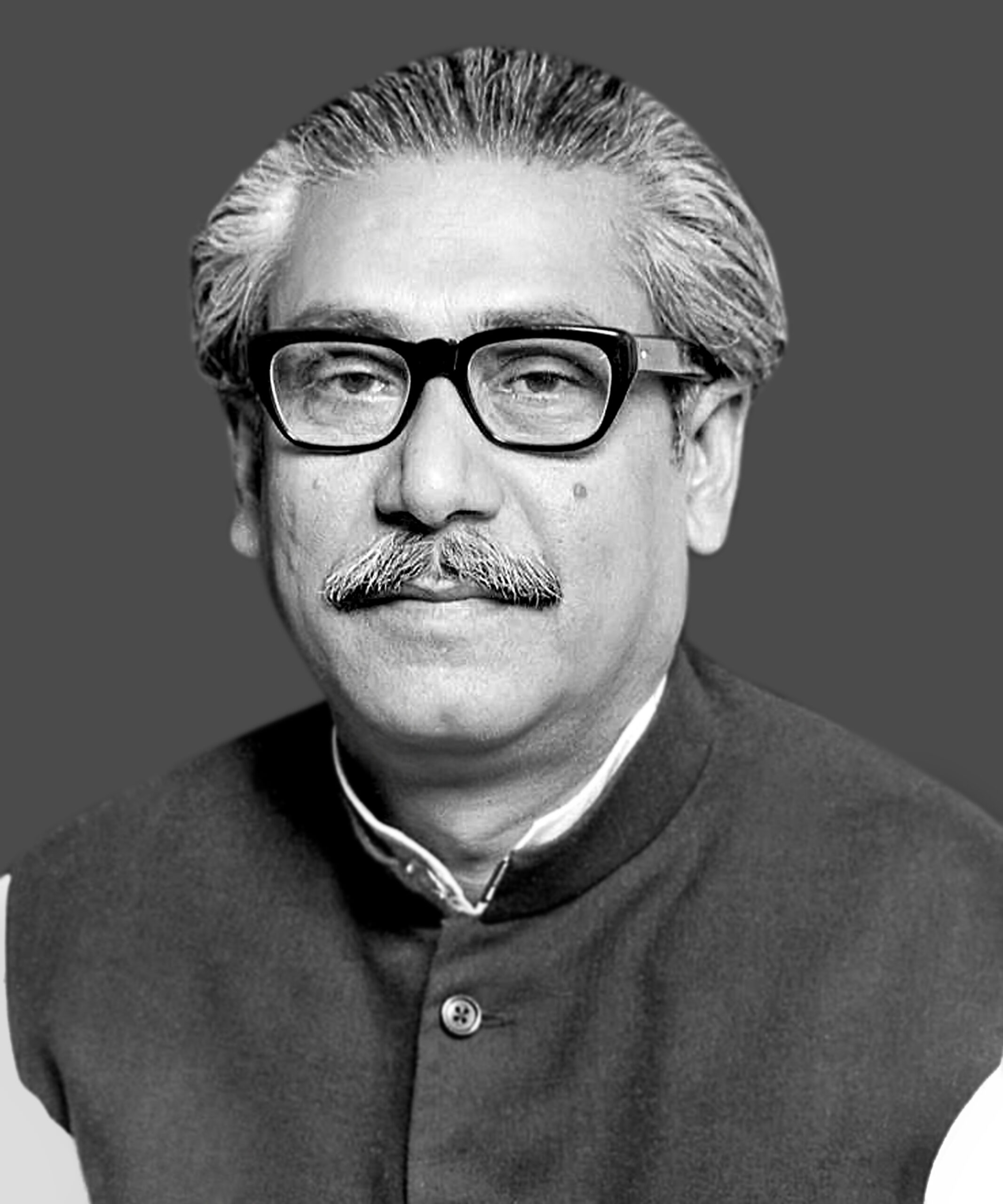
Sheikh Mujibur Rahman
The leader of the Awami League through the movement for self-rule, and the founding leader of independent Bangladesh.
- Born17 March 1920, Tungipara
- Died15 August 1975, Dhaka
- Known asBangabandhu, “Friend of Bengal”
His life in brief
Sheikh Mujibur Rahman joined the Awami Muslim League at its founding in 1949 and rose to lead it. As the party’s leader he took the demand for the self-rule of East Bengal to the public, most notably through the Six-Point Programme of 1966.
After the Awami League won a majority in the 1970 election, the crisis that followed led to the Liberation War of 1971 and the independence of Bangladesh. He led the new country until 15 August 1975, when he was assassinated together with most of his family.
This page brings together his life, his speeches and writing, and articles about his leadership. Each fact is sourced; interpretation is labelled as such.
Key dates
- 1920
Born on 17 March in Tungipara, in today’s Gopalganj district.
- 1949
Elected a joint secretary of the newly founded East Pakistan Awami Muslim League.
- 1953
Becomes general secretary of the party.
- 1966
Announces the Six-Point Programme for autonomy and is elected party president.
- 1969
Released after the Agartala Conspiracy Case is withdrawn; given the title “Bangabandhu” at a public gathering in Dhaka.
- 1970
Leads the Awami League to a majority in Pakistan’s general election.
- 1971
Delivers the 7 March speech in Dhaka. Arrested by the Pakistan Army on the night of 25 March and held in West Pakistan during the Liberation War.
- 1972
Returns to Dhaka on 10 January and becomes Prime Minister of Bangladesh.
- 1975
Becomes President in January. Assassinated on 15 August with most of his family.
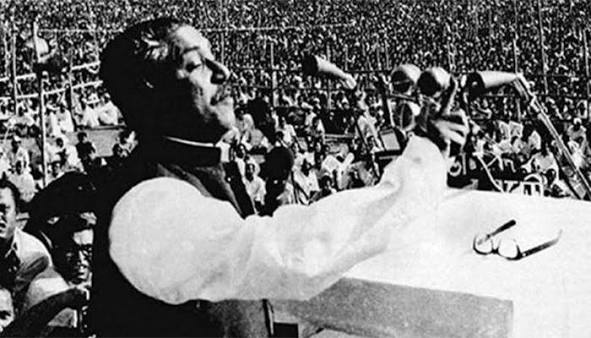
7 March 1971
The 7 March speech
Delivered to a vast crowd at the Racecourse Ground in Dhaka, the speech called on the people of East Bengal to prepare for the struggle ahead. In 2017 UNESCO added it to its Memory of the World Register.
In his own words
His writings, published after his death, are some of the best first-hand sources on his life.
The Unfinished Memoirs
Autobiography written in prison in the late 1960s, covering his early life and politics. Published 2012.
The Prison Diaries
Diaries kept during his imprisonment in the 1960s. Published 2017.
New China 1952
His account of a visit to China in 1952. Published 2020.
Have something to add?
Documents, photographs or a well-sourced article about Bangabandhu are welcome.